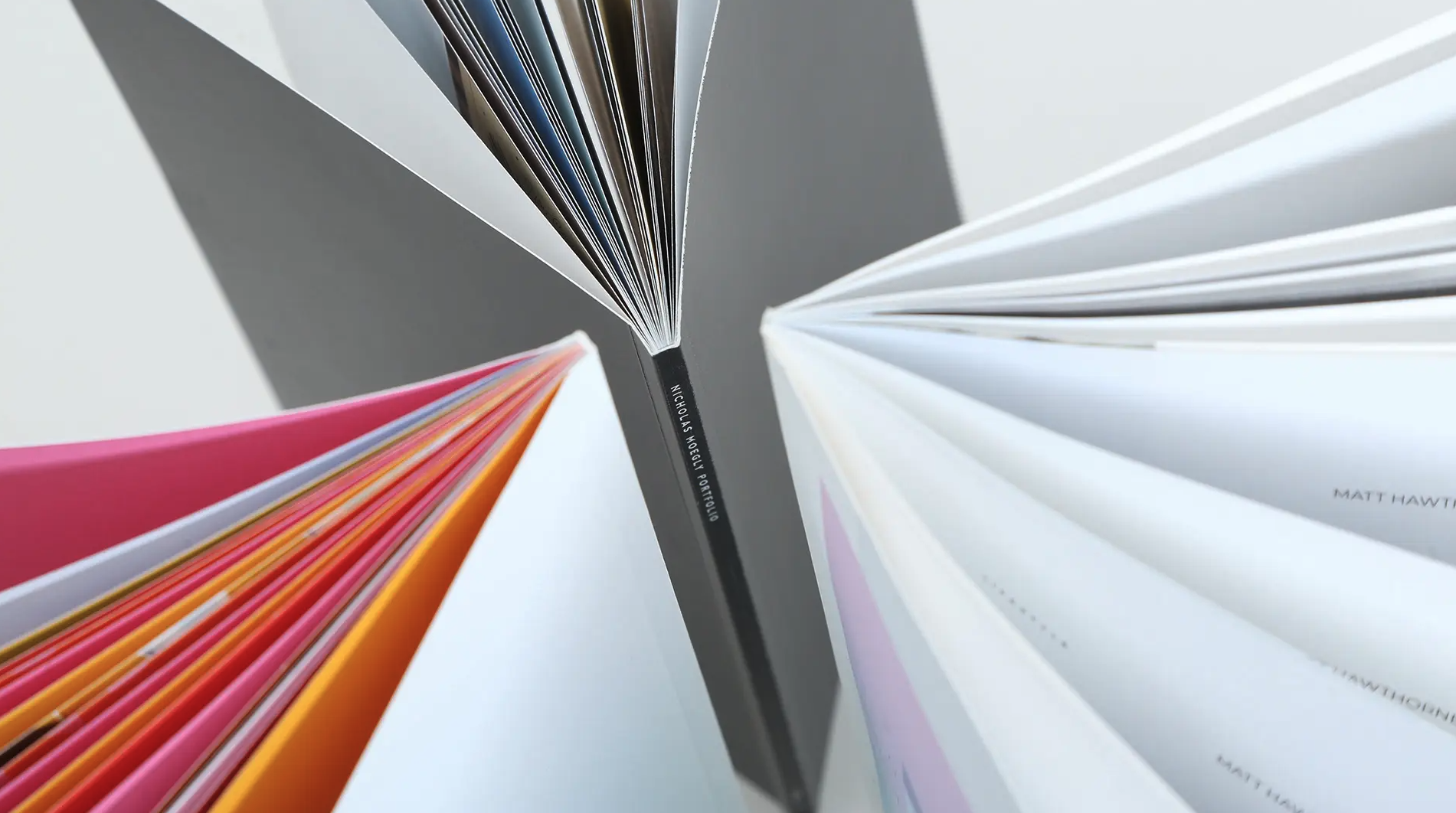
How to Print with Crossover
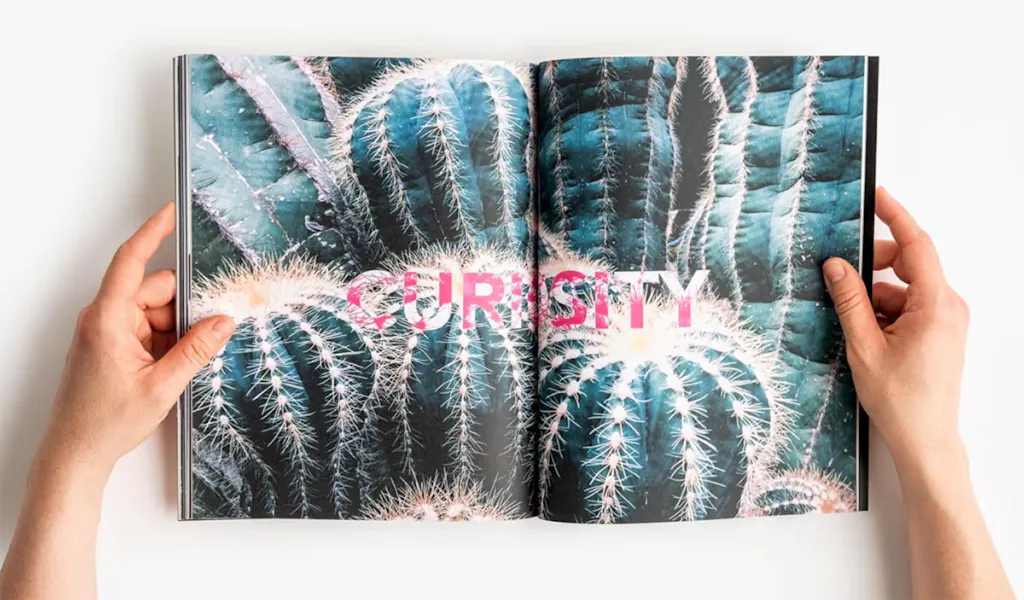
A printing crossover means a page spread has text and/or an image that crosses over the spine from the left page to the right page, like in a booklet. When designing a crossover for online printing, it’s important to properly align the pages so objects that cross the spine don’t appear misaligned or partially omitted.
Designing With Crossover
Follow these best practices when designing a printing crossover to minimize the appearance of normal production variations:
- Keep the main subject in images from crossing the spine.
- For example, it’s not visually appealing for someone’s head or face to be in the spine.
- Keep text away from the spine.
- To do this, align the text so that the spine is between words.
- If that isn’t possible, use a large bold font that will be less noticeable than a thin scripted font.
If you have questions about your design or just want help with an idea, please contact our Layout Services team. They’ll be happy to discuss your ideas and help bring them to life.
For questions about crossover and any other printing services, contact customer service and chat with our print experts.
Tips & Tricks
Crossover design is especially important for perfect bound booklets because they generally have more pages and do not lay completely flat. saddle stitch booklets generally lay flatter, making it easier to see content near the spine.
With perfect binding, the hinge (or pivot point) between the inside cover and the first text page is generally 1/4″ away from the edge. If a critical crossover is used with a perfect binding, compensation will need to be made to the file so the crossover remains aligned and less noticeable in the finished booklet.
More advanced crossover techniques may be needed for perfect-bound booklets, particularly when important text or imagery crosses the spine.
For questions about printing crossovers and any other printing services, contact customer service and chat with our print experts.